

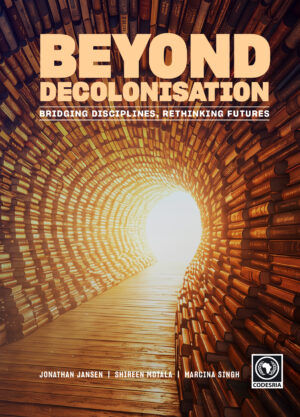
Beyond Decolonisation: Bridging Disciplines, Rethinking Futures
Highlights:
A bold and timely intervention, Beyond Decolonisation: Bridging Disciplines, Rethinking Futures asks the question many have avoided: what comes after decolonisation? Moving across education, law, culture, migration, and philosophy, this interdisciplinary volume explores how colonial power endures and how more just, plural, and imaginative futures can be made. Grounded in African and global contexts, it goes beyond critique to offer fresh thinking on transformation, belonging, epistemic justice, and human flourishing. Urgent, original, and wide-ranging, this is an essential book for anyone rethinking knowledge, institutions, and possibility in the contemporary world.
Authors
Jonathan Jansen is Professor of Education at Stellenbosch University and Past President of the Academy of Science of South Africa. As a curriculum theorist, he specialises in the politics and poetics of knowledge.
Shireen Motala is NRF/DHET SARChI Chair: Teaching and Learning (Tier 1) at the University of Johannesburg. Prof Motala has held numerous leadership roles related to higher education. An NRF-rated researcher, her research record is substantial.
Marcina Singh is an interdisciplinary higher education researcher working between South Africa and the Netherlands. She previously served as the Acting Deputy Director at the Centre for International Teacher Education, at the Cape Peninsula University of Technology.
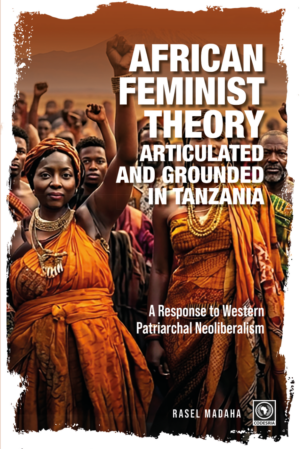
African Feminist Theory Articulated and Grounded in Tanzania: A response to Western Patriarchal Neoliberalism
Highlights:
A Response to Western Patriarchal Neoliberalism
In African Feminist Theory Articulated and Grounded in Tanzania: A Response to Western Patriarchal Neoliberalism, the intricate ways Tanzanian women have defined and defended their own liberation are meticulously explored. Moving beyond the constraints of Western-centric frameworks, this work examines how local activists and scholars have articulated a unique African feminism—one deeply rooted in communal values, historical resistance, and local realities.
By investigating the intersection of patriarchal structures and neoliberal economic policies, the book highlights how Tanzanian women challenge global power dynamics while grounding their theory in the lived experiences of their communities. It is a vital contribution to decolonial thought, offering a powerful testament to the intellectual agency and resilience of African women.
This study serves as both a historical record and a forward-looking manifesto for a feminism that is authentically grounded, fiercely independent, and transformative.
Author
Rasel Madaha is a multidisciplinary scholar-activist whose work reclaims the narrative of African feminism from the shadows of Western patriarchal neoliberalism. Since 2007, he has dedicated his career to grounding feminist theory in the lived experiences of Tanzanian women and men through consistent action research and community engagement.

Let the people speak : Tanzania Down the Road to Neo-liberalism (Printed)
Highlights:
Let the people speak : Tanzania Down the Road to Neo-liberalism
The African national project has been defeated, and the imperial/globalisation project is on the offensive. And yet, as Issa Shivji, one of Africa’s most distinguished public intellectuals, argues in this collection of essays, there is bound to be a backlash – witness Latin America. African scholars are already debating the resurgence of nationalism and Pan-Africanism, and searching for alternative paths of development and democracy.
The ninety essays contained in this book are selected by the author from his writings published in newspaper columns during the period 1990-2005, a critical time in Tanzania that witnessed the rise and fall of nationalism, and transition to and consolidation of neo-liberalism. The essays give an overview of the intellectual history and traditions in Tanzania, one of the few countries in Africa which can still boast of political stability and reasonable openness. The writings reflect the hopes and fears of the progressive intellectual community, and project a strong sense of the enduring ideas and values in the period. The author’s aims are to recover the history of the recent past in Tanzania, build a narrative of where the country is coming from, and provide a historical understanding of the events and climate of the present.
The essays give an overview of the intellectual history and traditions in Tanzania, one of the few countries in Africa which can still boast of political stability and reasonable openness. The writings reflect the hopes and fears of the progressive intellectual community, and project a strong sense of the enduring ideas and values in the period. The author’s aims are to recover the history of the recent past in Tanzania, build a narrative of where the country is coming from, and provide a historical understanding of the events and climate of the present.
$25