

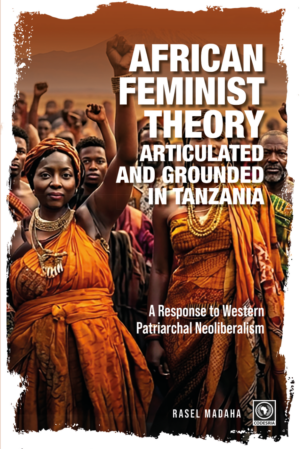
African Feminist Theory Articulated and Grounded in Tanzania: A response to Western Patriarchal Neoliberalism
Highlights:
A Response to Western Patriarchal Neoliberalism
In African Feminist Theory Articulated and Grounded in Tanzania: A Response to Western Patriarchal Neoliberalism, the intricate ways Tanzanian women have defined and defended their own liberation are meticulously explored. Moving beyond the constraints of Western-centric frameworks, this work examines how local activists and scholars have articulated a unique African feminism—one deeply rooted in communal values, historical resistance, and local realities.
By investigating the intersection of patriarchal structures and neoliberal economic policies, the book highlights how Tanzanian women challenge global power dynamics while grounding their theory in the lived experiences of their communities. It is a vital contribution to decolonial thought, offering a powerful testament to the intellectual agency and resilience of African women.
This study serves as both a historical record and a forward-looking manifesto for a feminism that is authentically grounded, fiercely independent, and transformative.
Author
Rasel Madaha is a multidisciplinary scholar-activist whose work reclaims the narrative of African feminism from the shadows of Western patriarchal neoliberalism. Since 2007, he has dedicated his career to grounding feminist theory in the lived experiences of Tanzanian women and men through consistent action research and community engagement.

Beyond Disciplines: African Perspectives on Theory and Method
Highlights:
Beyond Disciplines: African Perspectives on Theory and Method
To what extent can we go beyond disciplinary boundaries to produce knowledge on Africa that has emancipatory and transformational power? Beyond Disciplines: African Perspectives on Theory and Method, attempts to address this question. Among the critical issues covered by contributors to the book include the limitations of Eurocentric approaches on illuminating and explaining African social contexts; the value of critical African scholarship to our understanding of the continent’s political economy of development; the descriptive, explanatory, and predictive potency of interpretivist emancipatory approaches vis-à-vis positivist developmental ones; the significance of gender power analysis for understanding women’s experiences of violent extremism; application of social science research across research communities on the critical issue of environmentalism; as well as theorising the confluence of internal displacement, weaponisation and agency of women and violent extremism. The book, authored by scholars from multiple disciplinary backgrounds based at institutions across three continents, underscores the imperative value of transformational epistemologies for Africa and demonstrates that the generation of such epistemologies is contingent upon collaborative knowledge-production projects across epistemic communities.
DOI: https://doi.org/10.57054/codesria.pub.555
ISBN : 978 2 38234 092 9
Shadrack Wanjala Nasong’o, PhD, is a Professor of International Studies at Rhodes College in Memphis, Tennessee. His research interest lies in democratisation, identity politics, social conflict, governance and development. Nasong’o has been honoured with the Rhodes College’s Clarence Day Award for Outstanding Research and Creative Activity, and the Ali Mazrui Award for Research and Scholarly Excellence from the University of Texas at Austin.
Eka Ikpe, PhD, is a Reader and Director, African Leadership Centre at King’s College London. Her themes of interest include developmentalism, industrial development and structural transformation, peacebuilding, post-conflict reconstruction and the economic costs of conflict and creative economies.
$9 – $15Price range: $9 through $15