Capital Goods, Technological Change and Accumulation in Nigeria SC (Printed)
$8
B.U.N. Igwe & A. Fadahunsi
CODESRIA, 1994, 204 p.,
ISBN : 2-86978-032-X (paperback)
Related products
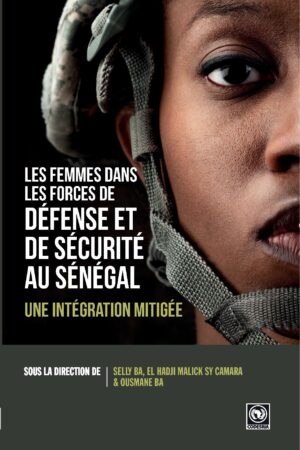
LES FEMMES DANS LES FORCES DE DEFENSE ET DE SECURITE AU SENEGAL / UNE INTEGRATION MITIGEE
L’intégration des femmes dans les forces de défense et de sécurité est au cœur du processus de démocratisation des systèmes politiques africains. L’image fortement masculine des forces de défense et de sécurité intervient dans la construction d’une identité professionnelle dont les plus grandes préoccupations sont liées à ancien un agent capable de devenir « homme », symbole de la virilité. Par conséquent, les filles nouvellement admises dans le secteur sont formées en tant qu’agents devant faire abstraction de leur statut de femme. De ce point de vue, introduire l’analyse genre dans les études sur les forces de défense et de sécurité (FDS), c’est donc s’interroger sur les statuts et rôles des femmes et des hommes dans cet espace, tout en appréhendant l’impact des rapports sociaux dans l’exercice de leurs fonctions.
Recently Viewed
Education and Financing in Africa : The Kenyan Case Study (Printed)
Education and Financing in Africa : The Kenyan Case Study
The Kenya study, part of a series of case studies by the Education and Finance Working Group, explores ways of reinforcing the capacity and competence of the Ministry of Education in Kenya in building a framework for collaboration, information exchange and the optimal use of financial resources. The series analyses the best practices used in managing and allocating resources, and evaluating the education sector.
The study further highlights challenges in determining who should finance what in the cost-sharing scheme, how to counter the imbalance in allocations between personnel and non personnel salaries, poor management of resources and lack of accountability, and effectively handle centralised budgeting and management systems and the weaknesses in the harmonisation of policy, planning and budgeting. The study is rich in detail and offers original directions for a comparison with other African experiences.