Le financement de l’éducation et réformes budgétaires au Bénin (Printed)
$5
Joseph Ahanhanzo, Prudencia Zinsou, Yacinthe Gbaye, Joseph Prince Agbodgan & Arcadius Odjia
CODESRIA, 2001.- viii-106 p. (Série Groupe de travail Education et Finance)
ISBN : 2-86978-096-6
Related products
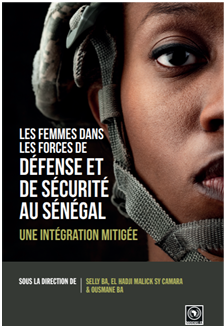
LES FEMMES DANS LES FORCES DE DEFENSE ET DE SECURITE AU SENEGAL / UNE INTEGRATION MITIGEE
L’intégration des femmes dans les forces de défense et de sécurité est au cœur du processus de démocratisation des systèmes politiques africains. L’image fortement masculine des forces de défense et de sécurité intervient dans la construction d’une identité professionnelle dont les plus grandes préoccupations sont liées à ancien un agent capable de devenir « homme », symbole de la virilité. Par conséquent, les filles nouvellement admises dans le secteur sont formées en tant qu’agents devant faire abstraction de leur statut de femme. De ce point de vue, introduire l’analyse genre dans les études sur les forces de défense et de sécurité (FDS), c’est donc s’interroger sur les statuts et rôles des femmes et des hommes dans cet espace, tout en appréhendant l’impact des rapports sociaux dans l’exercice de leurs fonctions.
Recently Viewed
Coloniality of Power in Postcolonial Africa – Myths of Decolonization
Coloniality of Power marries the historical complexities of the past with the ambiguities of the present to expose the obstacles imposed by domination and exploitation, while at the same time revealing the oppositional strategies of intellectual and other forms of everyday and organized resistance and nationalism on behalf of the ongoing project of nation building. The urgency of the moment drives the practical insurgencies to produce The Africa We Want.
Toyin Falola, Professor and author of Decolonizing African Studies
“Ndlovu-Gatsheni demonstrates an encyclopedic knowledge of post-colonial and colonial theory in his evaluation of current African problems.” (From review of Coloniality of Power in Journal of Retracing Africa)
Jason Morgan, University of Texas at Austin
“To decolonise is not automatically to emancipate; to proclaim the postcolonial is not necessarily to end dependency. These terms become often a rhetoric to avoid a sometimes painful exploration and interrogation of the contradictions involved in the long road to true and authentic freedoms. Sabelo Ndlovu-Gatsheni’s startling and important new book refuses us the luxury of rhetoric and invites us to go very much deeper.”
Stephen Chan, Professor of World Politics, SOAS, University of London

From National Liberation to Democratic Renaissance in Southern Africa (Printed)
Today, much research is being devoted to the key actors and factors of the southern African liberation project: the dynamism of post-liberation statecraft; the pursuit of truth and reconciliation; affirmative action and black economic empowerment; post-liberation identities and xenophobia; the problems and prospects of democratic renewal; post- liberation economics from the point of view of national liberation projects; regionalism, regional initiatives such as NEPAD; the region’s relationship with the rest of the continent; and diaspora linkages.