This book covers diverse histories of student movements in post-apartheid South Africa, taking note of the historical moment of the 1976 student uprisings and the evolution of student activism since that seminal event. Decolonization and reform of the higher education sector are important themes of the book. The volume aims to understand how student movements comprehend and articulate demands for the process of decolonization and Africanization of the curriculum, their transformative effect on the university and the role that a decolonized and African university should play in South African society’s pursuit of freedom. The book explores transformation of universities specifically with regard to race, gender, patriarchy, sexuality, and people living with disabilities in relation to student experiences. The book also deals with aspects related to institutional racism, funding, class, access, violence, and student services. It explores the nature of contemporary student mobilization as a quest for education as freedom in a democratic country, deconstructing the Rhodes Must Fall and Fees Must Fall movements that have reignited interest in the role of student activism in South African society. This book is timeless and timely: celebrating and critiquing student activism in transforming higher education, society and our times.
CHASING FREEDOM Histories, Analyses and Voices of Student Activism in South Africa
$9 – $15Price range: $9 through $15
CHASING FREEDOM Histories, Analyses and Voices of Student Activism in South Africa
Zukiswa Mqolomba is a former SRC President of the University of Cape Town, former Provincial Executive Committee member of SASCO and alumnus student leader. She is a Mandela Rhodes Scholar and Chevening scholar. She has two master’s degrees and also holds an executive leadership training certificate. Mqolomba now works for the Presidency of the Republic of South Africa.
Suntosh R. Pillay is a clinical psychologist and researcher in the public sector in Durban, South Africa, with roots in student journalism, community mobilizing and mental health advocacy. He completed his Masters in Social Sciences degree at the University of KwaZulu-Natal (UKZN), and is affiliated to UKZN’s Department of Clinical Medicine. He is committed to developing critical psychopolitical theory and practices in South Africa.
| Book Format / Format du livre | Hard Copy / Format papier, Soft Copy / Format electronique |
|---|
Related products
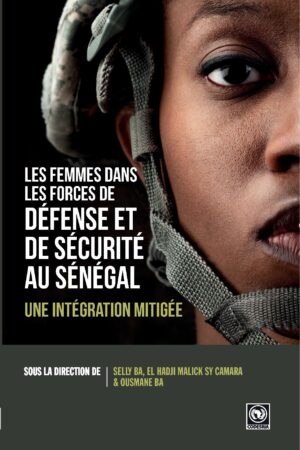
LES FEMMES DANS LES FORCES DE DEFENSE ET DE SECURITE AU SENEGAL / UNE INTEGRATION MITIGEE
L’intégration des femmes dans les forces de défense et de sécurité est au cœur du processus de démocratisation des systèmes politiques africains. L’image fortement masculine des forces de défense et de sécurité intervient dans la construction d’une identité professionnelle dont les plus grandes préoccupations sont liées à ancien un agent capable de devenir « homme », symbole de la virilité. Par conséquent, les filles nouvellement admises dans le secteur sont formées en tant qu’agents devant faire abstraction de leur statut de femme. De ce point de vue, introduire l’analyse genre dans les études sur les forces de défense et de sécurité (FDS), c’est donc s’interroger sur les statuts et rôles des femmes et des hommes dans cet espace, tout en appréhendant l’impact des rapports sociaux dans l’exercice de leurs fonctions.
Les matérialités contemporaines du religieux aux frontières du privé
Dans les sociétés ouest-africaines, l’espace public est fortement imprégné de religiosités. Il s’y édicte une kyrielle de conduites à tenir susceptibles d’influencer les croyants. Comprendre ces dynamiques religieuses implique de saisir comment ces normes pénètrent la vie privée des individus, et comment les croyants – chrétiens et musulmans – se saisissent de ces normes, les mettent en scène ou les détournent dans leur quotidien. Fruit d’un travail collectif mené dans l’ANR « Priverel », en partenariat avec les universités de Ouagadougou (Burkina Faso), Abomey Calavi (Bénin) et Gaston Berger (Saint-Louis, Sénégal), cet ouvrage s’appuie sur la notion « d’espace privé religieux » pour analyser l’appropriation par les croyants des normes religieuses au Bénin, au Burkina Faso, en Côte d’Ivoire et au Sénégal.
Recently Viewed
Décentralisation sans représentation: Le charbon de bois entre les collectivités locales et l’Etat (Printed)
Décentralisation sans représentation: Le charbon de bois entre les collectivités locales et l’Etat
La présente étude porte sur deux villages d’une collectivité locale du Sénégal. Elle consiste en une analyse de la problématique de la représentation politique locale, à travers la production de charbon de bois dans une forêt dont la gestion est dévolue aux élus locaux depuis la loi de la décentralisation, en 1996, par le biais des compétences transférées. Cette étude montre que si l’on retient comme critère l’obligation des élus de rendre compte aux administrés villageois et de répondre à leurs aspirations, en matière d’exploitation forestière, l’effet politique de la décentralisation est plutôt faible en termes de promotion de la démocratie locale. D’autre part, la répartition déséquilibrée des pouvoirs et ressources entre l’État et la collectivité locale explique, dans une certaine mesure, la faible efficacité des élus locaux en matière forestière, ainsi que les dysfonctionnements du couple déconcentration/- décentralisation. En matière d’exploitation forestière, l’action publique locale reste limitée par le poids des intérêts partisans, le manque de transparence et de répartition claire des rôles et responsabilités au sein du conseil rural. Le document se termine par un certain nombre de recommandations dont la mise en application devrait aider à améliorer la GRN au niveau des communautés rurales, notamment en rendant les conseillers ruraux plus responsables vis-à-vis de ceux qui les ont élus.
Kenya: The Struggle for Democracy (Printed)
« Riveting, compelling, engaging and inspiring… Not only is Kenya : The Struggle for Democracy a book of first-rate scholarship, it is an informative and readable treatise on the everyday expressions of Kenyan citizens’ intense passion for openness, justice and responsible governance ». Lisa Aubrey, Ohio University « A very refreshing, rigorous, informative and multidisciplinary analysis of Kenya’s transition to democratic governance, Kenya : The Struggle for Democracy not only identifies the reasons behind Kenya’s failure to institutionalise democracy, but it also provides possible solutions ». John Mukum Mbaku, Willard L. Eccles Professor of Economics and John S. Hinckley Fellow, Weber State University « A moving and comprehensive analysis of institutions and actors that have shaped Kenya’s future… For Africanists, this is compulsory reading which requires a response ». Winnie Mitullah, University of Nairobi.
CHASING FREEDOM Histories, Analyses and Voices of Student Activism in South Africa
Zukiswa Mqolomba is a former SRC President of the University of Cape Town, former Provincial Executive Committee member of SASCO and alumnus student leader. She is a Mandela Rhodes Scholar and Chevening scholar. She has two master’s degrees and also holds an executive leadership training certificate. Mqolomba now works for the Presidency of the Republic of South Africa.
Suntosh R. Pillay is a clinical psychologist and researcher in the public sector in Durban, South Africa, with roots in student journalism, community mobilizing and mental health advocacy. He completed his Masters in Social Sciences degree at the University of KwaZulu-Natal (UKZN), and is affiliated to UKZN’s Department of Clinical Medicine. He is committed to developing critical psychopolitical theory and practices in South Africa.