Africa and the Disruptions of the Twenty-first Century
$18 – $30Price range: $18 through $30
This collection of essays interrogates the repositioning of Africa and its diasporas in the unfolding disruptive transformations of the early twenty-first century. It is divided into five parts focusing on America’s racial dysfunctions, navigating global turbulence, Africa’s political dramas, the continent’s persistent mythologisation and disruptions in higher education. It closes with tributes to two towering African public intellectuals, Ali Mazrui and Thandika Mkandawire, who have since joined the ancestors.
| Book Format / Format du livre | Hard Copy / Format papier, Soft Copy / Format electronique |
|---|
Related products
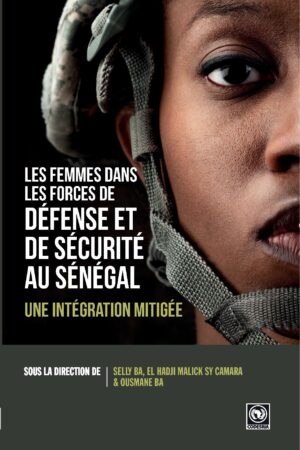
LES FEMMES DANS LES FORCES DE DEFENSE ET DE SECURITE AU SENEGAL / UNE INTEGRATION MITIGEE
L’intégration des femmes dans les forces de défense et de sécurité est au cœur du processus de démocratisation des systèmes politiques africains. L’image fortement masculine des forces de défense et de sécurité intervient dans la construction d’une identité professionnelle dont les plus grandes préoccupations sont liées à ancien un agent capable de devenir « homme », symbole de la virilité. Par conséquent, les filles nouvellement admises dans le secteur sont formées en tant qu’agents devant faire abstraction de leur statut de femme. De ce point de vue, introduire l’analyse genre dans les études sur les forces de défense et de sécurité (FDS), c’est donc s’interroger sur les statuts et rôles des femmes et des hommes dans cet espace, tout en appréhendant l’impact des rapports sociaux dans l’exercice de leurs fonctions.
Les matérialités contemporaines du religieux aux frontières du privé
Dans les sociétés ouest-africaines, l’espace public est fortement imprégné de religiosités. Il s’y édicte une kyrielle de conduites à tenir susceptibles d’influencer les croyants. Comprendre ces dynamiques religieuses implique de saisir comment ces normes pénètrent la vie privée des individus, et comment les croyants – chrétiens et musulmans – se saisissent de ces normes, les mettent en scène ou les détournent dans leur quotidien. Fruit d’un travail collectif mené dans l’ANR « Priverel », en partenariat avec les universités de Ouagadougou (Burkina Faso), Abomey Calavi (Bénin) et Gaston Berger (Saint-Louis, Sénégal), cet ouvrage s’appuie sur la notion « d’espace privé religieux » pour analyser l’appropriation par les croyants des normes religieuses au Bénin, au Burkina Faso, en Côte d’Ivoire et au Sénégal.
Recently Viewed
Africa and the Disruptions of the Twenty-first Century
This collection of essays interrogates the repositioning of Africa and its diasporas in the unfolding disruptive transformations of the early twenty-first century. It is divided into five parts focusing on America’s racial dysfunctions, navigating global turbulence, Africa’s political dramas, the continent’s persistent mythologisation and disruptions in higher education. It closes with tributes to two towering African public intellectuals, Ali Mazrui and Thandika Mkandawire, who have since joined the ancestors.
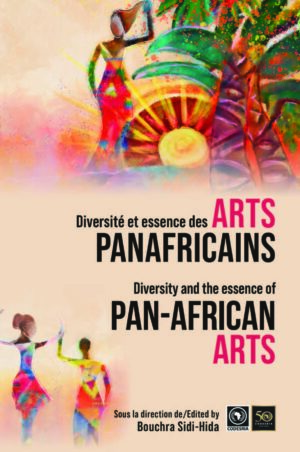
Diversité et essence des arts panafricains / Diversity and the Essence of Pan-African Arts
Diversité et essence des ARTS PANAFRICAINS / Diversity and the essence of Pan-African Arts
Les arts, la production artistique et littéraire en Afrique sont des échos du patrimoine culturel africain dans ses diversités, son essence, ses valeurs, ses réalités et ses contradictions. Ces résonances se traduisent de différentes manières d’une période à l’autre et d’une culture à l’autre. Elles propagent l’image authentique que l’Afrique se fait d’elle-même dans ses enthousiasmes, ses souffrances, ses malaises, ses défi s et sa résilience pour se dépasser, vivre le présent et imaginer son avenir. L’ensemble des chapitres de ce livre a été présenté pour la première fois dans le cadre de l’Institut sur les sciences humaines du CODESRIA qui s’est tenu en marge du Festival panafricain du cinéma et de la télévision, le Fespaco, à Ouagadougou, au Burkina Faso, en 2019. L’institut a réuni des chercheurs et des artistes africains pour réfléchir aux possibilités et aux implications de la (re)constitution de la mémoire et de l’histoire des arts (pan)africains dans le cadre d’un processus de problématisation des attitudes envers le passé et l’avenir.
Bouchra Sidi-Hida est docteure en sciences sociales de l’Université catholique de Louvain (UCL), Belgique. Elle a été chercheure séniore au CERSS au Maroc et est actuellement Administrateur de programme au CODESRIA. Sidi-Hida est chercheure associée à plusieurs centres de recherche dont le LPED de l’Université Aix Marseille, France. Elle est auteure de plusieurs articles et ouvrages et membre de plusieurs réseaux de recherche internationaux tel LMI Movida sur la migration.
——-
The Arts, artistic, and literary production in Africa are echoes of Africa’s cultural heritage in its diversities, essence, values, realities, and contradictions, being transmitted across generations. These resonances are translated in different ways from one period to another and from one culture to the other. They propagate the authentic image that Africa has of itself in its enthusiasms, its sufferings, its discomforts, its challenges, and its resilience to surpass itself, live the present, and imagine its future. The collection of chapters in this book was first presented as part of the CODESRIA Humanities Institute that took place on the sidelines of the bi-annual Pan-Africa Film and Television Festival, Fespaco, in Ouagadougou, Burkina Faso in 2019. The institute convened African researchers and artists to reflect on the possibilities and implications of (re)making the memory and history of the (Pan)African arts, as part of a process of problematizing attitudes toward the past and the future.
Bouchra Sidi-Hida holds a Ph.D. in social sciences from the Catholic University of Louvain (UCL), Belgium. She has been a senior researcher at CERSS in Morocco and is currently Programme Officer at CODESRIA. Sidi-Hida is an associate researcher with several research centres including the LPED of the University of Aix Marseille, France. She is the author of several articles and books and a member of several international research networks such as LMI Movida on migration.

Law and justice in a Multicultural Society: The case of Mozambique (Printed)
This book presents the main results of a research project on the systems of justice in Mozambique, undertaken under the auspices of the country’s Supreme Court, in academic partnership with the Center for African Studies at Eduardo Mondlane University, Mozambique and the Centre for Social Studies at the School of Economics, Coimbra University, Portugal. It is dedicated to the memory of the internationally renowned Mozambican economist and Professor of Development Studies, José Guilherme Negrão. Although he died prematurely, Negrão collaborated in this project, and authored the final chapter dealing with the vexed question of land.
Until the onset of Portuguese colonisation towards the end of the nineteenth century, the peoples of Mozambique did not live under a single political entity. Rather, they existed as independent entities with various forms of political and social organisation. The twentieth century saw a consolidation of colonial rule, and important changes in the organisation of power. After independence, new Eurocentric political-legal cultures were added to the existing mix of legal orders. The distinctions between the colonial law and indigenous customary law became increasingly blurred, such that Mozambique now constitutes a heterogeneous state composed of a mosaic of legal hybrids, incorporating local/indigenous customary practices and religious law, as well as state civil law.
Departing from a broad understanding of law in Mozambique, this work analyses the complex network of judicial systems by interrogating the roles of the entities intervening in the system in colonial and postcolonial contexts. The main objective is to promote an empirically sound and dynamic understanding of the relationships between the multiple judicial entities present in the country within the context of cultural transformation in Africa. Overall, the book is intended as a contribution to current debates on the formation of the state in Mozambique from the nineteenth century.
The authors further considers the alternative mechanisms of conflict resolution taking place in the complexity of different legal rationalities: the remains of the Portuguese legal codes, socialist policies, customary law, religious systems and Western constitutionalism.
Masculinities in Contemporary Africa (Printed)
Although gender and non-gender scholars have studied men, such an academic exercise requires a critical and focused study of masculine subjects in particular social contexts, which is what this book attempts to do. This empirically rich collection of essays, the seventh of the CODESRIA Gender Series, deals with critical examinations of various shades and ramifications of Africa’s masculinities and what these portend for the peoples of Africa and for gender relations in the continent. So much has changed in terms of notions and expressions of masculinities in Africa since ancient times, but many aspects of contemporary masculinities were fashioned during and since the colonial period.
The papers in this volume were initially discussed at the 2005 month-long CODESRIA Gender Institute in Dakar. The contributors are gender scholars drawn from various disciplines in the wide fields of the humanities and the social sciences with research interests in the critical study of men and masculinities in Africa.
The CODESRIA Gender Series aims at keeping alive and nourishing the African social science knowledge base with insightful research and debates that challenge conventional wisdom, structures and ideologies that are narrowly informed by caricatures of gender realities. The series strives to showcase the best in African gender research and provide a platform for emerging new talents to flower.
LA DIPLOMATIE DE LA REPUBLIQUE DE GUINEE – Passé, présent et avenir
LA DIPLOMATIE DE LA REPUBLIQUE DE GUINEE
Passé, présent et avenir
La République de Guinée est devenue indépendante le 2 octobre 1958. En matière de politique étrangère, l’on constate des continuités ? travers tous les régimes en ce qui concerne certains fondements. Mais si la première République (1958-1984) a mis l’accent sur les considérations d’ordre idéologique, les régimes successifs depuis 1984 se sont concentrés plutôt sur les aspects économiques. Cet ouvrage présente les contextes géopolitiques de la diplomatie guinéenne depuis l’indépendance et porte un regard critique sur les moyens humains et les infrastructures à l’aide desquels elle s’est déployée. Il analyse la nature et les facteurs explicatifs des relations bilatérales entre la Guinée et certains des pays avec lesquels elle a entretenu des relations particulières. Il s’intéresse aussi aux actions multilatérales du pays dans les cadres notamment de la CEDEAO, de l’OUA/UA et de l’ONU. Le dernier chapitre porte un regard prospectif sur l’avenir de la diplomatie guinéenne à l’ère du numérique. Il s’appuie sur un solide rappel des théories de relations internationales dans la première partie, et une riche littérature en français et en anglais, y compris des documents officiels sur les différents aspects du livre. Il a bénéficié de beaucoup d’entretiens avec de nombreux diplomates guinéens.
Ghana: One Decade of the Liberal State (Printed)
« This is a ground-breaking, nuanced and comprehensive book that grapples with how developing countries in general and Ghana in particular have endured and responded to a decade of neo-liberal ascendancy. Based on astute research, experiences and analysis, the book offers penetrating commentaries on recent socio-economic and political developments in Ghana. A « must-read » collection of excellent and stimulating ideas. » Mohamed Salih, Professor of Politics of Development, University of Leiden and the Institute of Social Studies, The Netherlands « This, the first book-length assessment of the latest experiment in liberal democracy in Ghana, is a timely study. It shows in an admirable way both the progress and the still existing shortcomings in the institutionalization of liberal democracy and will undoubtedly attract a wide readership in academic and policy-making circles. » Ghana has witnessed a « revolution through the ballot box » since its return to constitutional rule in 1993. Yet this period of sustained democratic government in an era of globalization and liberal triumphalism has brought with it new demands. How has Ghana faced up to the problems of institution-building, state-market relations and democratic leadership? Can it deal with the challenges posed by security, human rights and foreign policy in the twenty-first century? This unique collection interrogates all these issues and assesses the future of the democratic experiment in one of sub-Saharan Africa’s rare « islands of peace ». In doing so, it provides an invaluable guide to Ghana’s political past, present and future.
Governing Health Systems in Africa (Printed)
Drawing on various disciplinary perspectives, this book re-focuses the debate on what makes a good health system, with a view to clarifying the uses of social science research in thinking about health care issues in Africa. The explosion of the HIV/AIDS pandemic, the persistence of malaria as a major killer, and the resurgence of diseases like tuberculosis which were previously under control, have brought about changes in the health system, with implications for its governance, especially in view of the diminished capacity of the public health facilities to cope with a complex range of expanded needs. Government responsibilities and objectives in the health sector have been redefined, with private sector entities (both for profit and not-for profit) playing an increasingly visible role in health care provisions. The reasons for collaborative patterns vary, but chronic under-funding of publicly financed health services is often an important factor. Processes of decentralisation and health sector reforms have had mixed effects on health care system performance; while private health insurance markets and private clinics are pointers to a growing stratification of the health market, in line with the intensified income and social differentiation that has occurred over the last two decades.These developments call for health sector reforms.
African Anthropologies: History, Critique and Practice (Printed)
This overview of the history, application and teaching of anthropology in post-colonial Africa shows how the continent’s anthropologists are redefining the historical legacy of European and American disciplinary hegemony, and developing distinctively African contributions to anthropological theory and practice. The contributors illustrate the diverse national traditions of anthropological practice that have developed in sub-Saharan Africa since decolonisation and exemplify the diversity of professional work carried out by the discipline’s practitioners. Their commitment to a common disciplinary identity demonstrates the place that exists for a critical anthropology that is reflective about both its potentials and limitations.